UIX Minipool - Update
case studies
01/24/2025

Overview
GoGoPool’s staking platform is built around the concept of minipools—a way for AVAX stakers to join the network as validators with lower entry barriers. While the functionality was there, the original UI made it difficult for users to quickly understand their stake health, rewards, and validation status.
Our goal with this update was to create a cleaner, more intuitive dashboard where users could confidently track their minipools, rewards, and staking performance.
Design Goals
- Clarity & Readability
-
Present core staking information (GGP ratio, AVAX staked, rewards) at a glance.
-
Group metrics logically (My Stake vs My Rewards).
- Scalable Structure
- Design with future features in mind: multiple minipools, advanced analytics, and better reward tracking.
- Action-Oriented
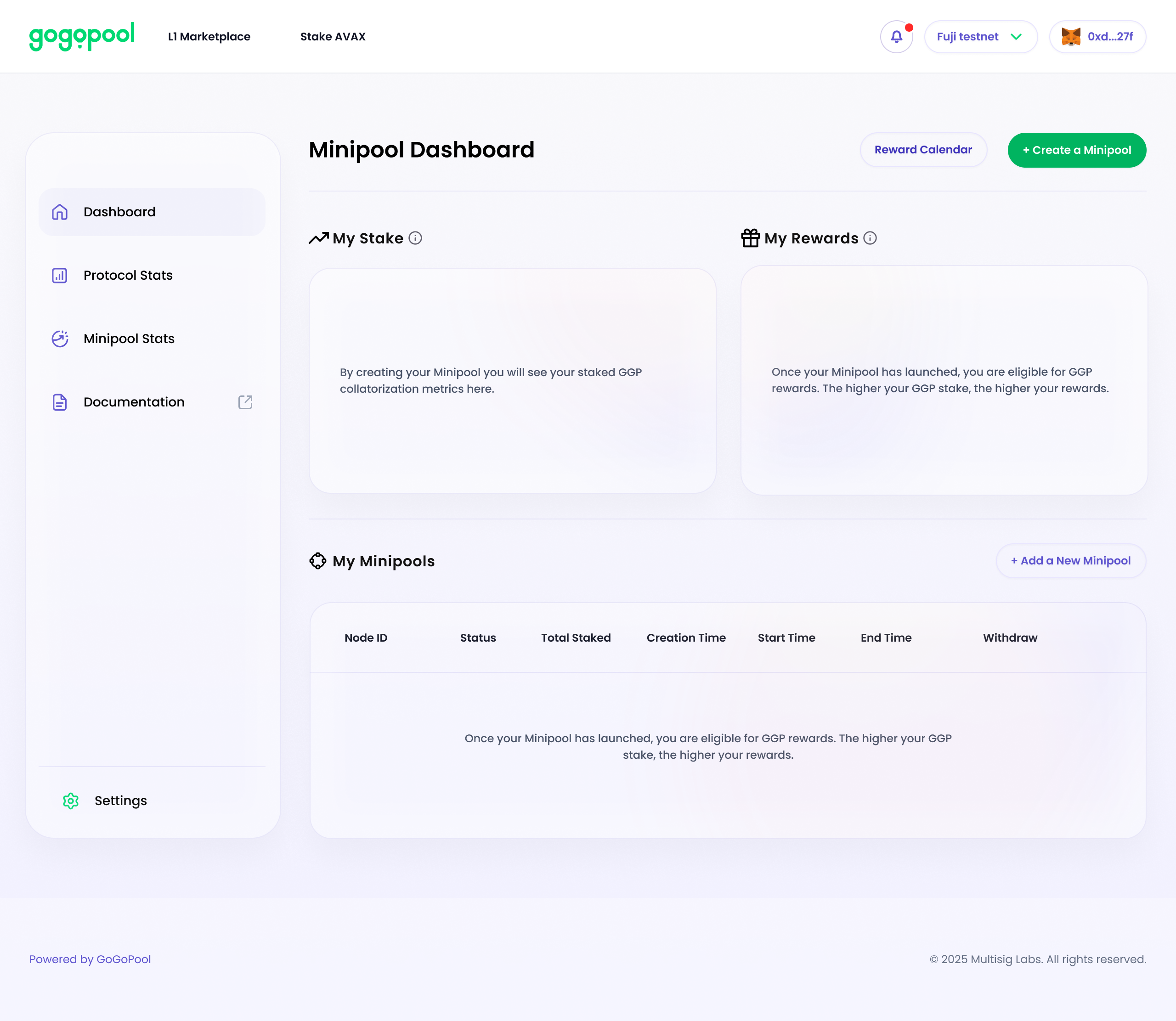
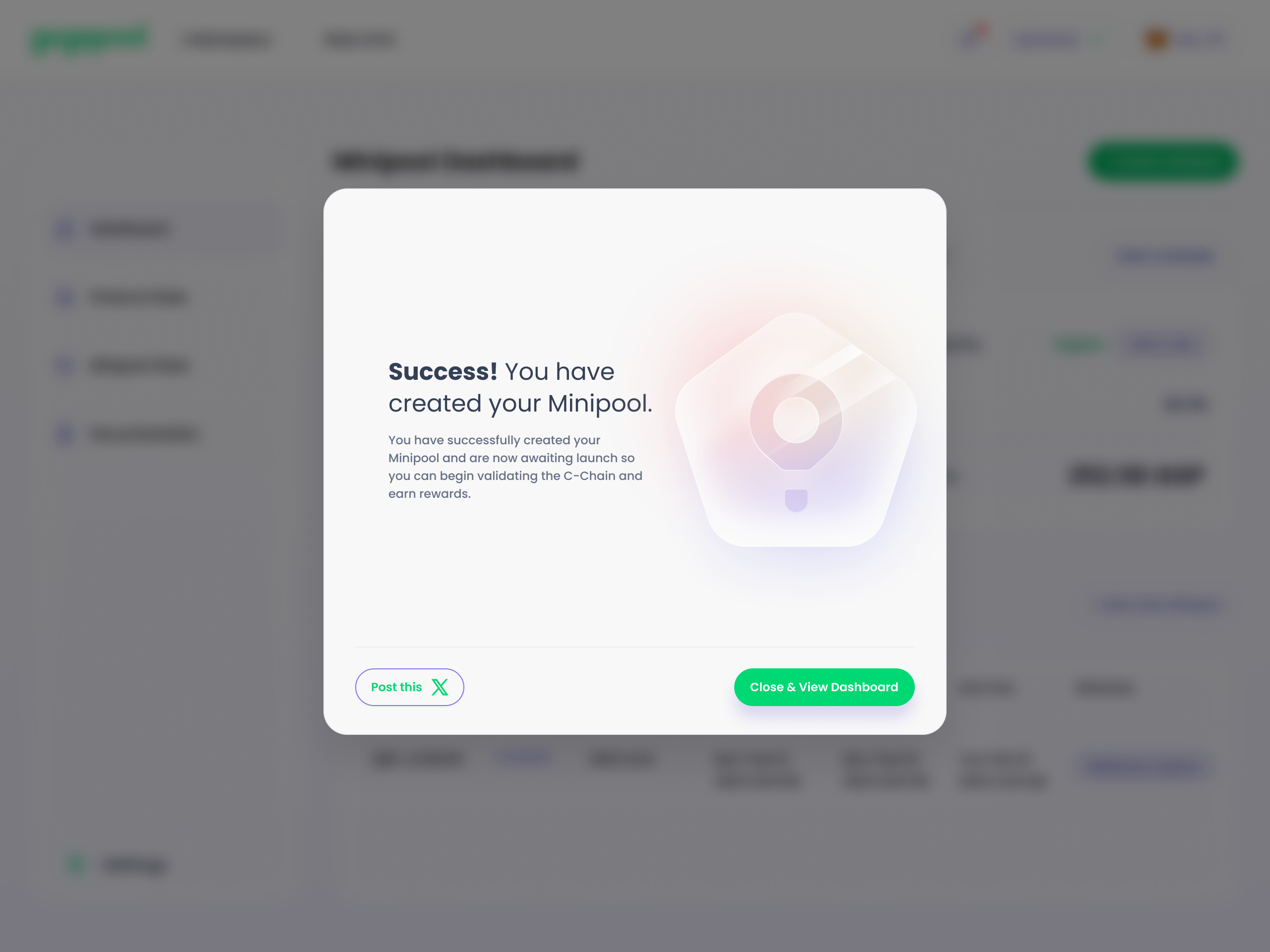
- Encourage user engagement with clear CTAs for creating minipools, claiming rewards, and exploring withdraw options.
- Consistency with Brand
- Match GoGoPool’s evolving brand identity: soft gradients, light backgrounds, and a modern DeFi dashboard feel.
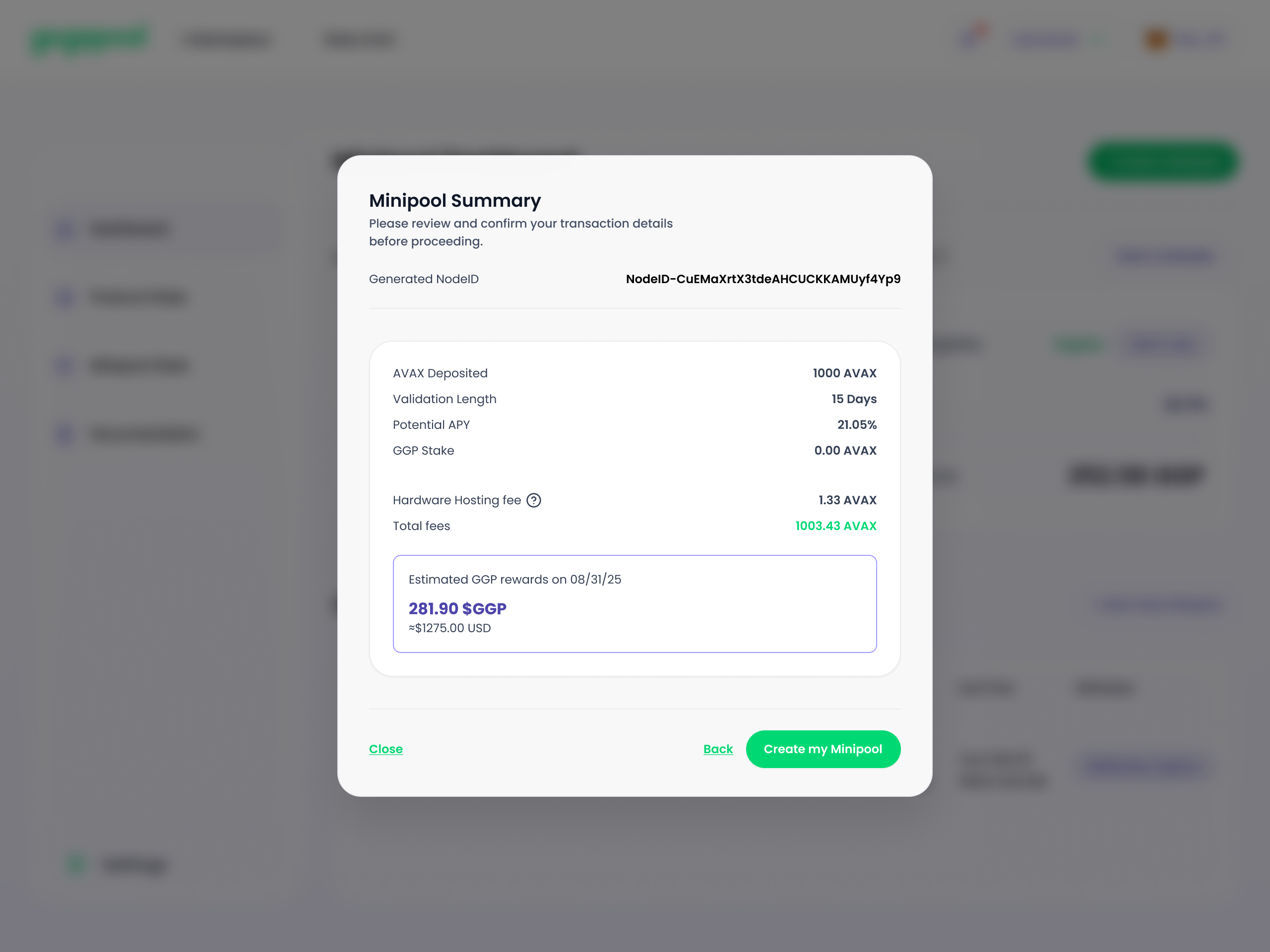
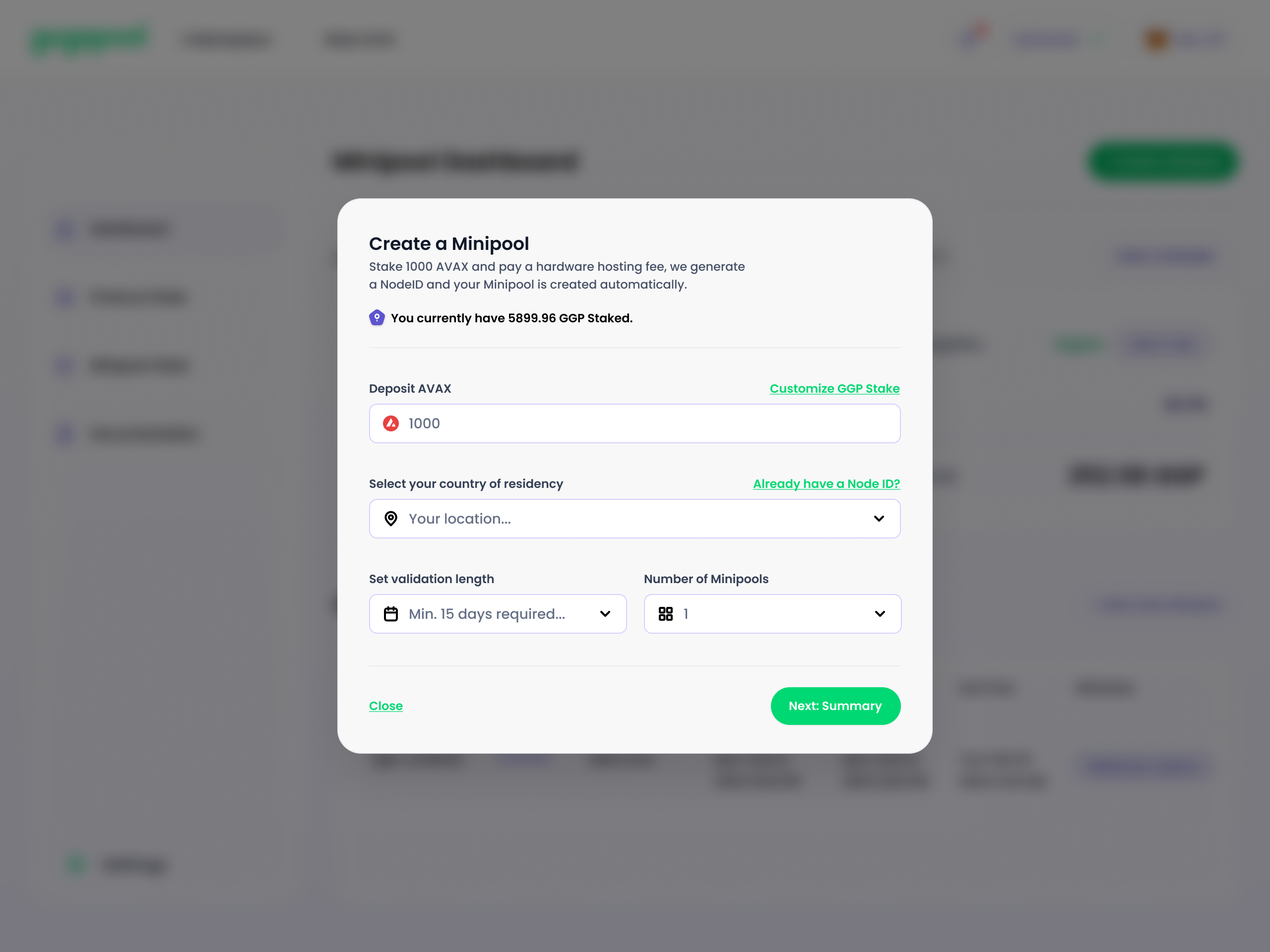
Process
Key Features of the Redesign
My Stake Panel
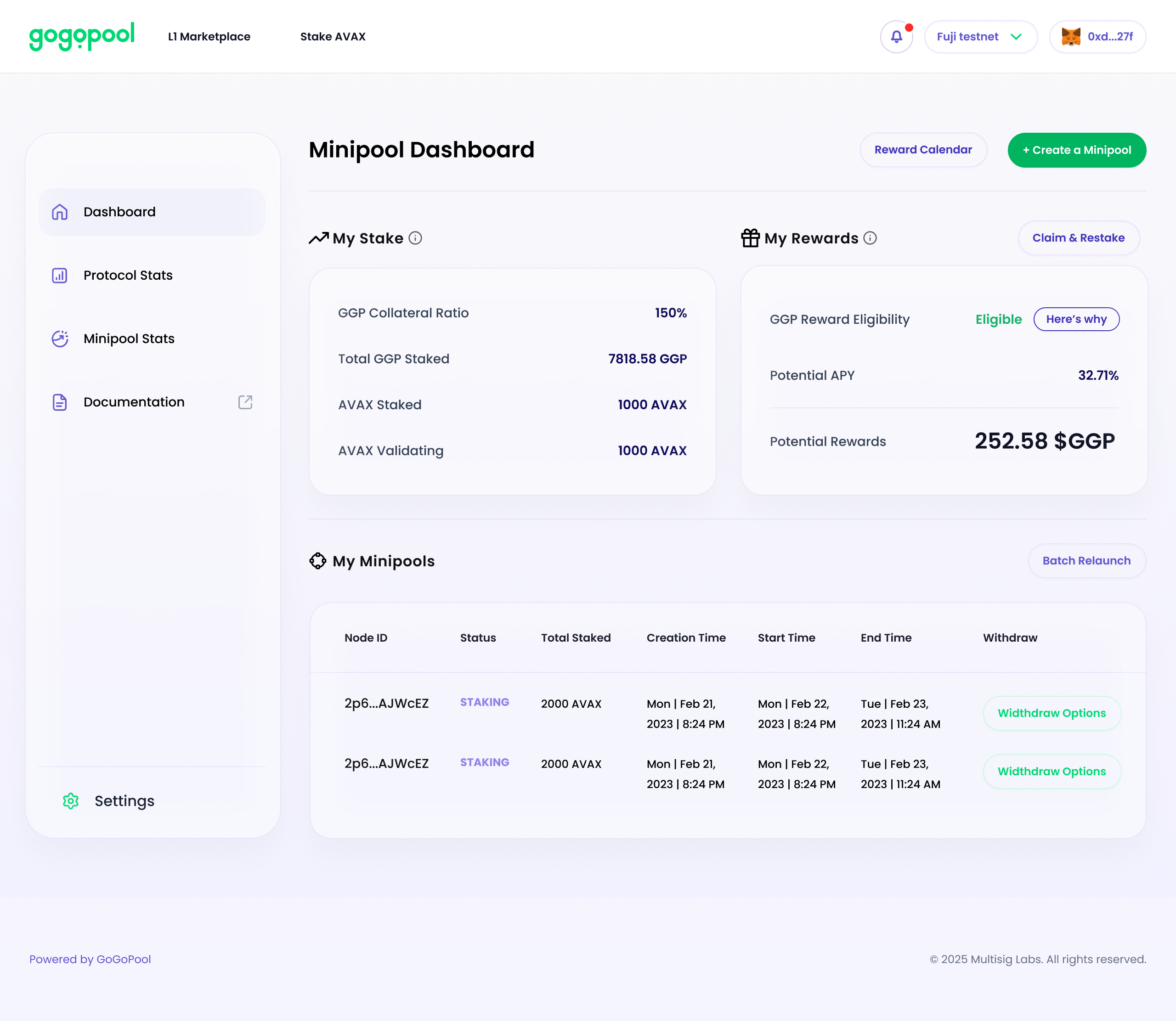
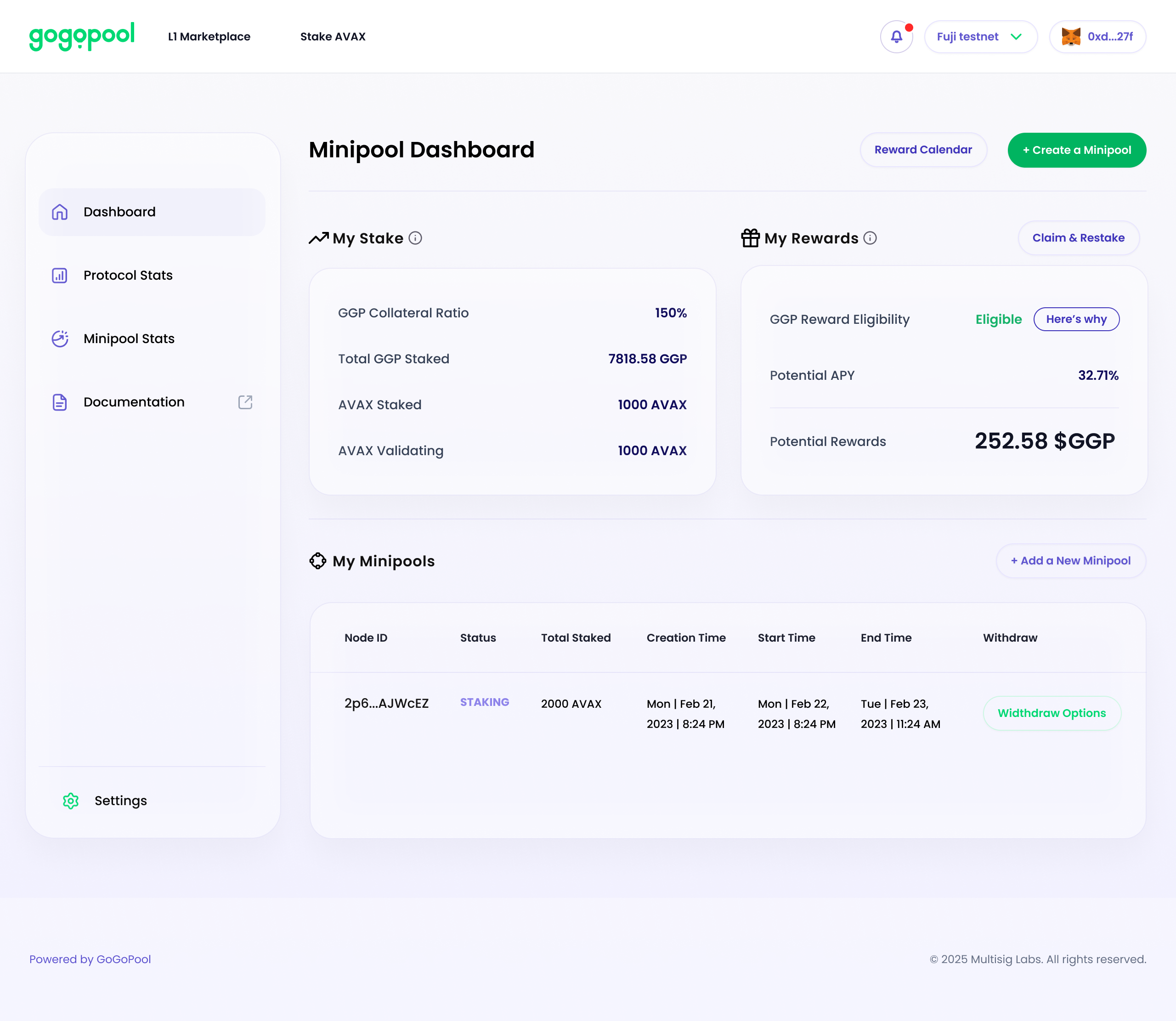
Displays collateral ratio, GGP staked, AVAX staked, and AVAX validating—ensuring users always know their position.
My Rewards Panel
Simplifies reward eligibility, APY, and claim options. Added contextual help (“Here’s why”) for eligibility status.
Minipools Table
A redesigned table shows Node ID, status, stake size, and lifecycle dates. Withdraw actions are highlighted for accessibility.
Reward Calendar
Introduced the concept of a “Reward Calendar” so users could anticipate payouts and plan re-stakes.
Future-Proofed Layout
Side navigation allows expansion for Protocol Stats, Minipool Stats, and Documentation—keeping users oriented as the platform grows.
Learnings
Even though this update didn’t make it into production, it served as a design blueprint for the next iteration of GoGoPool’s staking experience. The exercise clarified user needs, validated the importance of reward visibility, and highlighted opportunities for long-term scalability in the dashboard.
It also reinforced a key principle: even unshipped designs push the product forward by informing future iterations.